Coexisting with Snakes
- Jessica Broda
- May 2
- 3 min read
Updated: May 2
Snakes are a normal part of Florida ecosystems. Most are non-venomous and help us by controlling the rodent population and other pests. The goal is to coexist the best way possible.
Northeast Florida has four venomous snakes. There are three common species and one rare species.
-Eastern Diamondback rattlesnake (the big ones)
-Pygmy rattlesnake (the tiny ones)
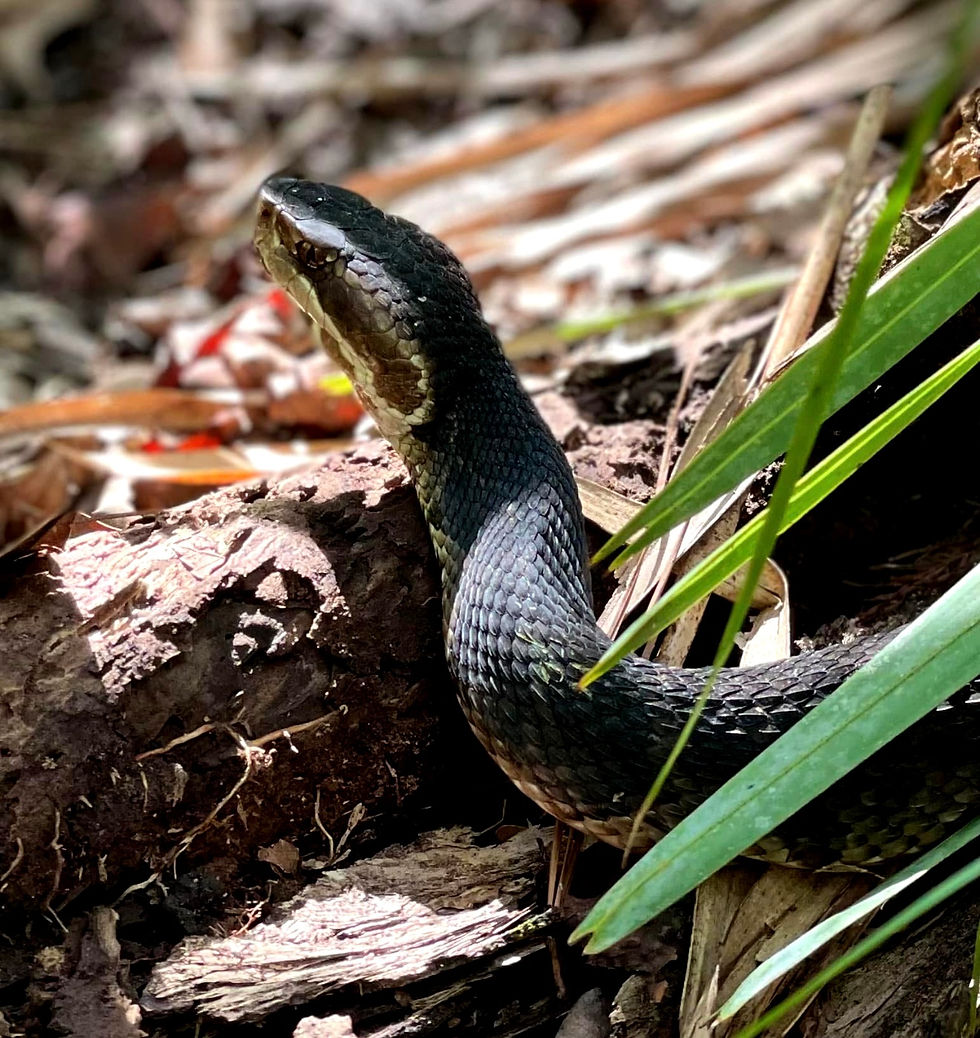
-Cottonmouth or Water Moccasin (stocky/dark, Zorro mask)
-Coral snake (black heads, multi-colored pattern)
Key point: You don’t need to memorize every species. If you can’t identify it with certainty, always treat it as potentially venomous and keep your distance.
Everyday safety tips and habits around your home:
-Watch where you step-especially in wooded areas, tall grass, leaf litter, or near small bodies of water
-Never reach blindly into bushes, rocks, or storage areas
-Always wear closed-toe shoes when outside
-Use a flashlight at night when going for a walk
-Keep your grass short and your yard clear of debris piles.
If you encounter a snake:
-Stop. Give space (6–10 feet minimum)
-Sometimes spraying a garden hose near the snake will usually get it moving
-Most snakes will usually leave on their own
-Never try to kill or handle the snake (this is when most bites happen)
-If a snake is found in a precarious spot (garage, porch, pool) call a local wildlife removal or snake relocation service (see below for removal contacts)
-If you are curious about the type of snake, there are many reputable snake identification sites on social media. By seeing other people’s pictures and posts, it helps to familiarize yourself with all the local snakes.
Pet Safety:
-Keep your grass short and cleared of stacked logs, leaf and debris piles
-Avoid letting your dog or cat explore brush piles or dense shrubs
-Always do a brief scan of your backyard before letting your pets out, especially in warmer months.
-When walking your dog on a trail, always keep them on a short leash.
Snake Bites and Pets:
-If you believe your pet was bitten, go to the nearest vet immediately, and call them ahead of time on your way.
-Do not try to capture or try to find the snake get a picture. The three common venomous snakes are all in the pit-viper family and the same anti-venom is used, therefore, identification is usually not necessary.
-If the bite was on the face or neck area, remove the collar immediately to prevent airway constriction.
-As an extra precaution, learn which local veterinarians carry anti-venom.
Human Snake Bites:
According to the Cleveland Clinic, a venomous snake bite is considered a medical emergency, and the following is recommended:
-If you are bitten by a snake, call 911 or go to the closest ER immediately.
-Do not try to capture or try to kill the snake for identification purposes. The same anti-venom is used for the three common pit-vipers here.
-Do not apply ice, heat, or a tourniquet, try to squeeze or “suck out” the venom.
-Stay calm and limit movement.
-If the bite was on an extremity, remove any jewelry as soon as possible to the affected limb.
-Do not take NSAIDS, or drink alcohol or caffeine immediately after.
Local Resources:
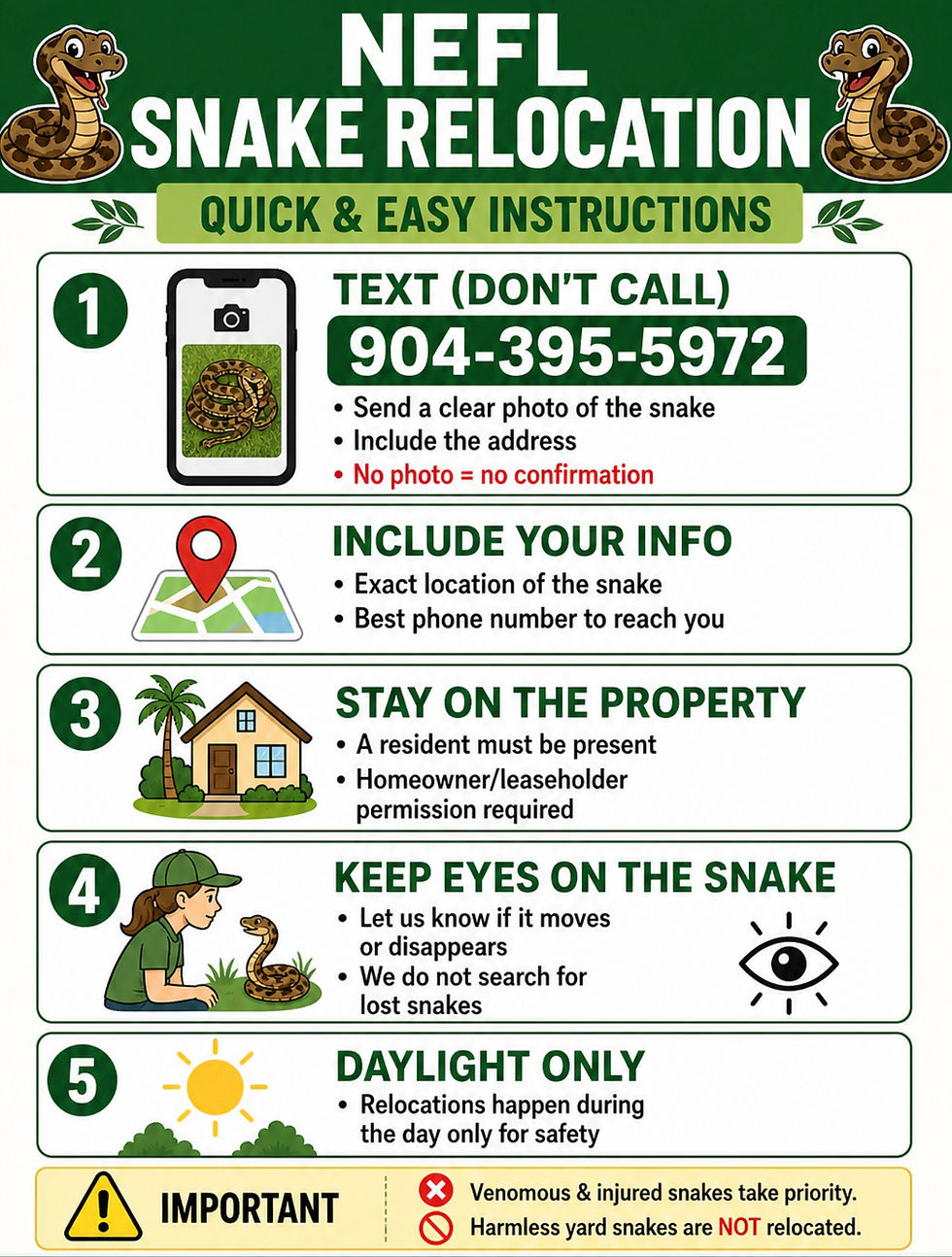
Northeast Florida Volunteer Snake Relocation:
Facebook Groups:
-Nocatee Snake Identification
-Nocatee Wildlife
-Florida Snake Rehabilitation and Rescue
______________________________________________________
Online Resources:
References:
Cleveland Clinic. (2024, April 2). Snake bites. https://my.clevelandclinic.org/health/diseases/15647-snake-bites
Florida Fish and Wildlife Conservation Commission. (n.d.). Living with snakes.
Florida Museum of Natural History. (n.d.). How to safely coexist with snakes. University of Florida.
National Snakebite Support. (2023). Veterinary pit viper envenomation for dogs and cats [Infographic]. https://www.facebook.com/groups/nationalsnakebite.support
Comments